
Rhodes Island Overview – Geography, Areas, Coastlines & What to Expect
Rhodes is one of the most structurally complete islands in Greece.
It is large enough to contain multiple distinct holiday personalities, varied enough to feel different depending on where you stay, and layered enough historically and geographically to reward deeper understanding before planning anything.
This page is not a travel guide.
It is not an itinerary.
It is not a booking page.
It is a structural overview — designed to help you understand how Rhodes works as an island before deciding how to experience it.
A major part of that structure is the coastline — from organised sandy bays to hidden coves and clear-water swimming spots — all broken down inside Best Beaches in Rhodes – Where to Swim, Relax & Explore.
Grab my FREE Rhodes Pocket Planner (instant download) — the hidden shortcut to easy boat trip bookings, must-do experiences, and smoother holiday planning.
Start Exploring Rhodes
If you're new to the island, these three guides will help you understand Rhodes quickly:
→ Rhodes Island Greece Hotels – Best Picks for 2026
→ Things to Do in Rhodes – Best Experiences by a Local
→ Plan Your Rhodes Trip – Accommodation, Transport & Itinerary
Where Rhodes Is Located & Why It’s Unique
Rhodes lies in the southeastern Aegean Sea, forming part of the Dodecanese island group. It sits much closer to Turkey than to mainland Greece, which has shaped both its history and its cultural layers over centuries.
Geographically, Rhodes functions almost like a small region rather than a simple island destination.
Rhodes is the largest island in the Dodecanese and one of the most historically layered islands in Greece, combining medieval architecture, resort coastlines, and rural mountain interiors within a single destination.
It stretches roughly 80 km from north to south, with a mountainous spine running down its centre. This natural backbone creates two very different coastal identities and a clear north–south development pattern.
The North: Urban & Structured
The northern tip is the most developed part of the island. It contains the main port, airport access routes, administrative centre, and the medieval Old Town.
This area operates year-round and forms the island’s logistical hub.
East Coast vs West Coast
One of the most important structural differences in Rhodes is the contrast between its east and west coasts.
East Coast:
Generally calmer water
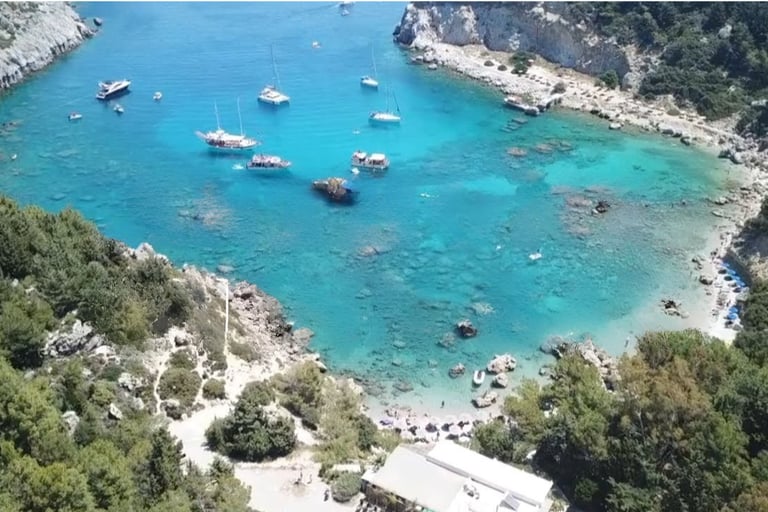
This is also where many of the island’s most popular swimming locations are found, including Anthony Quinn Bay Rhodes, Tsambika Beach Rhodes, and other iconic spots along the coastline.
More sheltered from strong Aegean winds
Smoother sea conditions
Higher concentration of organised resorts
West Coast:
Faces the open Aegean
Windier, especially in summer
Stronger waves
Popular for wind sports
This east–west split affects everything — beach type, sea temperature feel, resort atmosphere, and even where people prefer to stay depending on wind tolerance.
Inland Terrain
The interior of Rhodes is mountainous and greener than many first-time visitors expect. Pine forests, valleys, and traditional villages create a rural heart that contrasts sharply with coastal resort zones.
Because of this varied terrain, Rhodes never feels one-dimensional.
It has:
Urban medieval character
Long resort coastlines
Quiet southern stretches
Rural mountain villages
Understanding this structure makes every later planning decision easier.
Explore in depth:
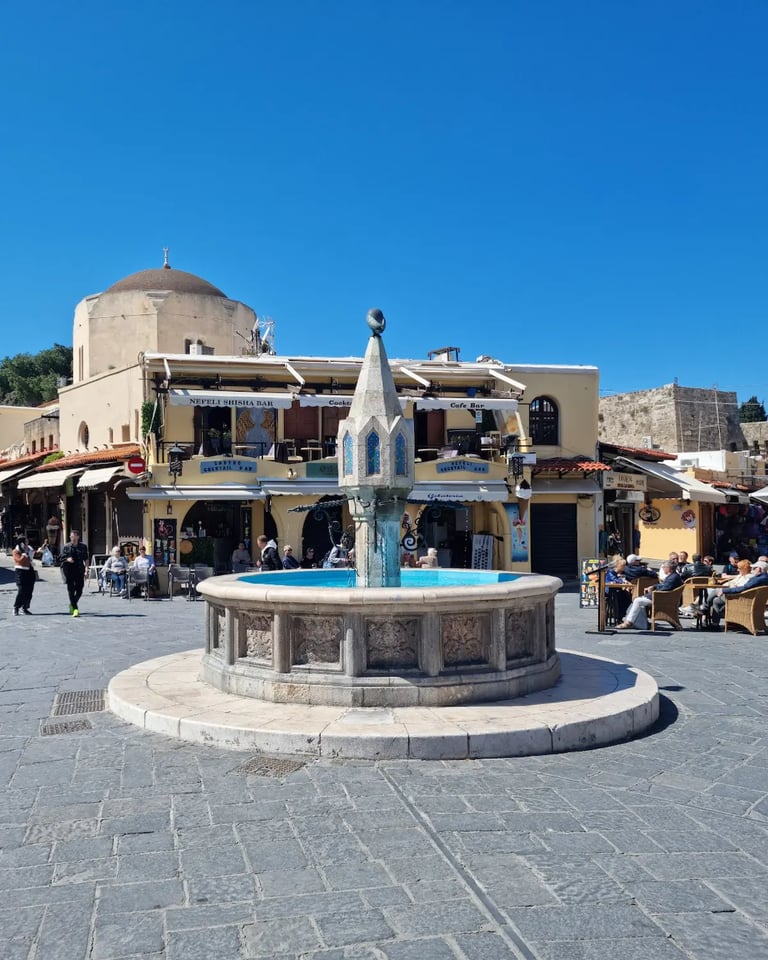
Understanding the Main Regions of Rhodes
Rhodes is not experienced the same way everywhere.
The island naturally divides into three broad zones: north, central, and south. Each has its own rhythm, landscape feel, and holiday personality. Understanding this structure helps you choose the right base later — without guessing.
The North: Energy, Access & Density
The northern tip is the most developed and most active part of the island.
Rhodes Town is the capital and cultural heart. It combines medieval architecture, modern shopping streets, harbour life, and year-round local activity. It feels structured, walkable, and layered. This is where history, restaurants, nightlife, and transport connections concentrate.
Just west of the town sit Ixia and Ialyssos. These areas stretch along the windier coast, offering long beachfront hotel zones and open sea views. The atmosphere here is more resort-linear — long coastal roads, larger properties, and sunset-facing beaches.
Moving east from Rhodes Town, the landscape becomes softer and more curved. Kallithea transitions toward Faliraki, where long sandy bays and organised beach infrastructure dominate. Faliraki is one of the most structured tourism hubs on the island.
Further south, Kolymbia sits in a more central position along the east coast. It feels more contained and balanced — not as busy as the north, not as remote as the far south.
Central Rhodes: Transitional & Greener
Central Rhodes is less about large resort zones and more about transition.
Here you begin to see:
Inland villages
Agricultural land
Pine-covered hills
Smaller coves and varied coastline shapes
It feels quieter without being remote. Many travellers pass through central Rhodes while exploring different parts of the island.
The South: Space, Simplicity & Openness
South of central Rhodes, development thins out and the island opens dramatically.
Lindos is the architectural exception. Its whitewashed village layout and hilltop acropolis create one of the most recognisable landscapes in Greece. It feels historical and scenic rather than resort-linear.
Further south, the coastline stretches wider.
Pefkos, Lardos, Kiotari, and Gennadi each offer progressively more space and less density as you move downward. The southern part of Rhodes feels calmer, more spread out, and less urbanised.
Distances increase. Roads feel longer. Beaches become wider and less crowded outside peak months.
Rhodes does not operate as one uniform resort island.
Structurally, Rhodes operates as a north-to-south corridor of distinct micro-destinations connected by a primary coastal route.
Understanding these regional personalities makes accommodation decisions far easier later.
Explore in depth:
Area Guides:
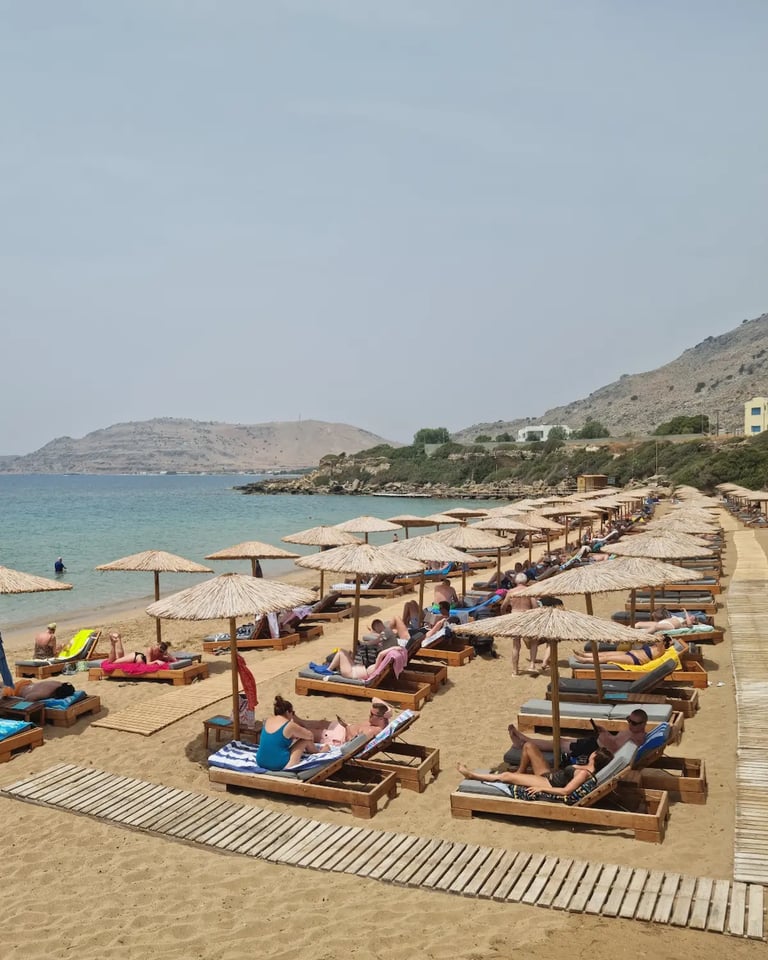
Coastlines & Beach Landscape Explained
If you want a full breakdown of where to swim, how beach types differ, and which areas match your travel style, see Best Beaches in Rhodes – Where to Swim, Relax & Explore, where I organise the island’s coastline in a practical, local way.
A common misconception is that all beaches in Rhodes feel similar — in reality, coastline character changes dramatically depending on location.
Because of the island’s length, wind exposure, and geological variation, the coastline changes character significantly from north to south and from east to west.
Understanding this structure prevents unrealistic expectations.
East Coast: Calmer & More Predictable
The east coast is generally more sheltered from strong summer winds. The sea here is typically calmer, clearer, and easier for long swimming sessions.
Beaches along this side are often:
More organised
Easier to access
Close to resort zones
Suitable for families
Sand is more common here, although many beaches mix sand and small pebbles. Water entry tends to be smoother, with fewer large waves during peak season.
This is where most classic “holiday postcard” swimming days happen.
West Coast: Windier & More Dramatic
The west coast faces the open Aegean Sea.
It is windier, especially during summer Meltemi periods. The sea can feel cooler and more energetic. Waves are more common.
Beaches here are often:
Pebblier
Less sheltered
More open in landscape
Popular for wind-based sports
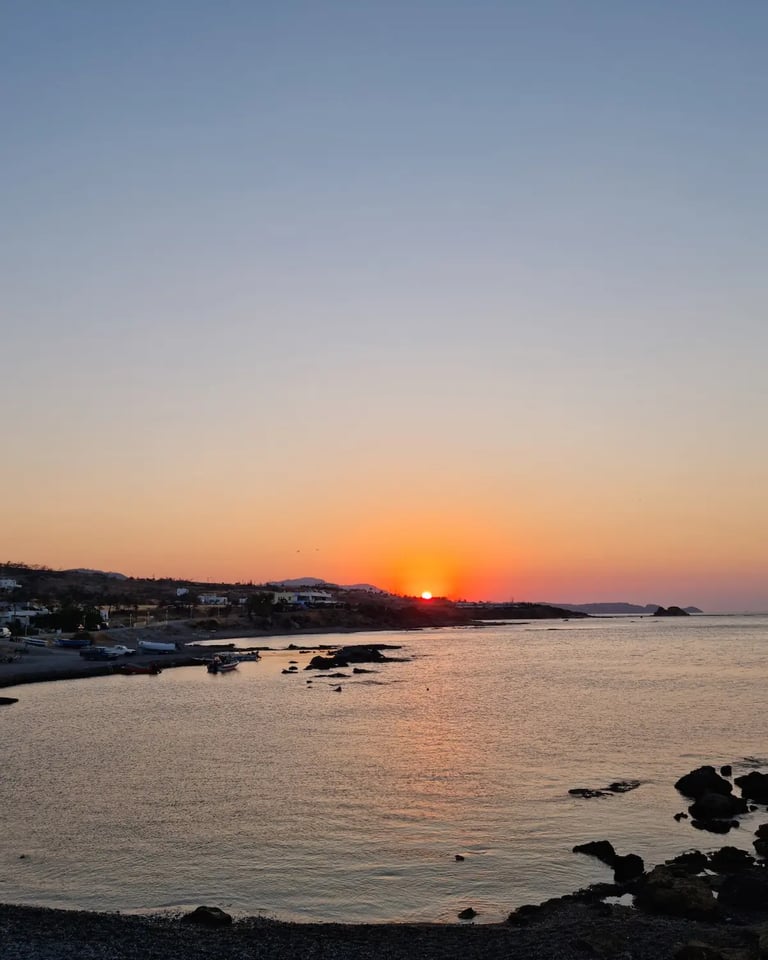
Sunsets on the west coast are often striking, as the sun drops directly over the sea.
The experience feels less resort-soft and more elemental.
Organised vs Wild
Rhodes contains both highly organised beaches and completely natural stretches.
Organised beaches typically include:
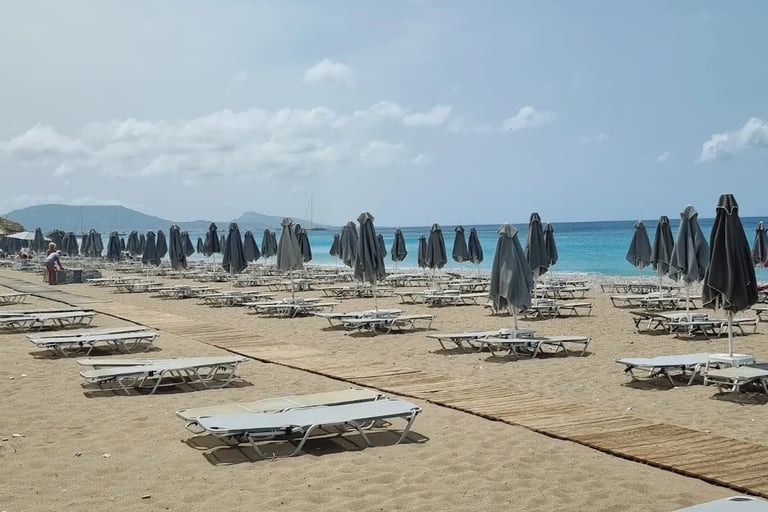
Sunbeds and umbrellas
Beach bars
Water activities
Easy parking access
More natural beaches offer:
Open space
Fewer facilities
Wider stretches of shoreline
A quieter atmosphere outside peak months
The further south you travel, the more frequent the long, open stretches become.
Sandy vs Pebbly
Rhodes is not exclusively sandy.
You will find:
Long sandy bays
Mixed sand-and-pebble beaches
Fully pebbled coastlines
Small rocky coves ideal for snorkelling
This variation is part of the island’s appeal — but it also means choosing the right area matters depending on personal comfort preferences.
Blue Flag & Water Quality
Many beaches in Rhodes hold Blue Flag status, with several of the best spots explained inside Rhodes Blue Flag Beaches. The island is known for its clear, transparent sea, especially along the eastern coast.
Water clarity remains one of the island’s strongest natural assets.
Rhodes beaches are not a single category.
They are a system shaped by wind direction, geography, and development patterns.
If you prefer quieter or less developed areas, you can also explore Best Quiet Beaches in Rhodes, where I break down calmer, less crowded coastline options.
Understanding that system helps you decide what type of coastline suits you best.
Explore in depth:
Featured beach guides:
What Travellers Actually Do in Rhodes
Rhodes is not a “single-experience” island.
Most visitors follow a rhythm that blends history, beach time, light exploration, and at least one organised experience.
Understanding that natural flow helps set realistic expectations.
1. Explore the Medieval Core
Nearly everyone spends time inside the Old Town. It functions as both a historical site and a living district.
Travellers wander through:
Stone alleyways
Fortified gates
Courtyards
Harbour viewpoints
Even those staying far south usually dedicate at least one day to the northern capital area.
2. Alternate Beach & Exploration Days
Most holidays follow a simple pattern:
Beach day → Light exploring day → Beach day → Boat trip → Relaxation day
Because the island stretches long rather than wide, people typically explore in one direction per day instead of circling the entire island.
Most travellers end up returning to the same few beaches once they understand which areas suit them — which is why using Best Beaches in Rhodes – Where to Swim, Relax & Explore early helps avoid wasted travel time.
3. Take at Least One Boat Trip
Rhodes is surrounded by clear water, small coves, and nearby islands — many of the best swimming spots are only fully experienced from the sea, which I explain inside Best Boat Trips in Rhodes.
Many visitors choose:
A swim-focused cruise
A sunset sail
A day trip toward nearby islands
Boat days often become highlight memories, especially in summer.
4. Visit Lindos
Lindos draws nearly every type of traveller at least once.
It offers:
Elevated views
Whitewashed architecture
A compact, walkable layout
Scenic swimming bays
It feels visually distinct from the north.
5. Explore Inland or South
Travellers with more time often head:
Toward the southern coast for open beaches
Into the interior for quieter landscapes
Toward traditional villages
The longer the stay, the further south people usually venture.
Rhodes holidays are rarely rushed.
The island works best when you mix structured sightseeing with slow coastal days.
It rewards balance rather than checklist travel.
Explore in depth:
Getting Around the Island
Rhodes is large enough that transport choice shapes your entire experience.
Unlike smaller Greek islands where everything feels close, distances here matter. Moving from the northern tip to the far south is not a short hop — it is a deliberate journey.
Understanding how movement works on the island helps you choose your base more intelligently later.
The Island’s Road Structure
Rhodes operates around one main coastal road that runs north to south along the east side. Smaller connecting roads branch inland and toward the west coast.
Because of this layout:
Travel tends to happen in linear directions
People explore one section per day
Crossing from east to west usually means passing through interior roads
The further south you stay, the longer return journeys become when exploring the north.
Car Travel: Flexibility & Reach
Many visitors choose to drive because it allows access to:
Southern beaches
Mountain villages
West coast viewpoints
Remote stretches
Driving in Rhodes is generally straightforward. Roads are paved, signage is clear, and navigation is simple once you understand the island’s long shape.
A car provides flexibility — especially for travellers staying outside the northern hub.
Public Buses: Structured & Area-Based
Rhodes has a functioning public bus system connecting major resorts and towns.
However:
Routes are structured rather than circular
Timetables vary by season
Southern routes are less frequent
Buses work well for travellers staying along main east coast resort zones who plan limited movement.
Taxis & Transfers: Convenience Over Flexibility
Taxis are widely available in developed areas. They are most commonly used for:
Airport arrivals
Short local transfers
Night returns
For longer exploration days, taxis are less commonly used due to cost accumulation.
Movement Psychology
Transport in Rhodes is less about difficulty and more about distance awareness.
If you stay in the north, northern exploration feels easy.
If you stay in the south, southern beaches feel effortless but northern return trips require planning.
The island rewards strategic positioning.
Rhodes is not complicated — but it is spacious.
Choosing the right transport method depends on:
Length of stay
Base location
Exploration ambition
Comfort with driving
Understanding this before booking anything prevents later frustration.
Explore in depth:


Seasonality & Travel Patterns
Rhodes changes character throughout the year.
Not dramatically — but noticeably enough that timing shapes your experience.
Understanding seasonal rhythm helps set expectations around atmosphere, wind, sea temperature, and overall pace.
Summer: Structured Energy
From June through September, Rhodes operates at full capacity.
Resorts are open.
Boat schedules run daily.
Beach infrastructure is fully active.
Nightlife peaks.
July and August are the busiest months. Expect:
Warmer sea temperatures
High sun intensity
More organised beach environments
Stronger Meltemi winds, especially on the west coast
This is when Rhodes feels most alive — but also most structured.
Shoulder Season: Balance & Breathing Space
Late spring and early autumn offer a softer version of the island.
May, early June, late September, and October typically bring:
Warm but milder temperatures
Fewer crowds
Easier restaurant reservations
Calmer resort atmosphere
The sea remains swimmable well into autumn. Many experienced travellers prefer this period because it combines comfort with lower density.
Winter: Local Life & Limited Tourism
From November through March, Rhodes shifts into local mode.
Tourism infrastructure reduces significantly. Many seasonal businesses close, especially in southern resort zones.
However:
Rhodes Town remains active year-round
Historical areas stay accessible
The island feels authentic and uncrowded
Winter visitors experience Rhodes differently — more as a living island than a summer destination.
Wind Patterns Across Seasons
Summer Meltemi winds typically affect the west coast more strongly.
Spring and autumn can bring variable breezes but generally feel less intense than peak July–August patterns.
Sea temperature usually peaks in late August and remains pleasant into October.
Rhodes is not just a “summer-only” island.
It has a long shoulder season and a year-round local core — particularly in the north.
The key difference across seasons is density and structure, not beauty.
Explore in depth:
Who Rhodes Is Best For
Rhodes is not a niche island.
It works for multiple travel styles because its regions, coastline types, and accommodation patterns vary significantly from north to south.
Instead of asking whether Rhodes is “good,” it is more useful to consider:
“What type of traveller does each part of Rhodes suit best?”
Families
Rhodes works particularly well for families because:
Many east coast beaches are calm
Resorts are structured and walkable
Distances between major areas are manageable
Historical sites are visually engaging rather than purely educational
Families who prefer predictable beach days and light exploration usually find the island comfortable and easy to navigate.
Couples
Couples often gravitate toward:
Scenic villages
Elevated viewpoints
Sunset-facing coastlines
Boutique-style stays
Rhodes balances romantic scenery with relaxed coastal days, making it suitable for both active and slower-paced trips.
Solo Travellers
Rhodes is generally considered straightforward and safe.
Solo travellers benefit from:
Walkable northern areas
Good bus connections along main routes
Structured tourism infrastructure
Clear coastal layout
The island does not feel isolating in developed zones, especially during peak season.
Seniors
The island’s infrastructure supports slower travel styles well.
Flat promenades, organised beaches, accessible Old Town routes, and straightforward road systems make Rhodes manageable for older travellers — particularly in the north and central east.
Digital Nomads & Longer Stays
Rhodes Town functions year-round and offers:
Cafés
Services
Stable infrastructure
Walkability
Longer stays often gravitate toward the northern zone due to winter activity and service access.
Adventure & Nature-Oriented Travellers
While Rhodes is not extreme-terrain focused, it offers:
Hiking routes
Coastal drives
Windsurfing areas
Snorkelling coves
Inland nature pockets
The west coast and southern stretches tend to attract travellers who prefer movement over resort lounging.
Rhodes is not one-dimensional.
Its diversity is what allows different traveller types to coexist — often in completely different parts of the island.
Choosing the right base matters more than choosing the island itself.
Explore in depth:


Cost Expectations & Travel Style
Rhodes sits somewhere in the middle of the Greek island cost spectrum.
It sits between budget-friendly islands and ultra-premium destinations such as Mykonos or Santorini. Its size allows for a broader range of accommodation styles and dining options, which creates flexibility across budgets.
Budget vs Mid-Range vs Premium Feel
Because Rhodes stretches long and contains many resort zones, pricing varies by:
Area
Season
Proximity to the sea
Hotel style
Northern and high-demand scenic areas often feel more structured and slightly higher priced during peak summer. Southern and less dense areas can feel more spacious and occasionally better value outside high season.
The island supports:
Self-catering apartments
Mid-range resort hotels
Boutique stays
Larger all-inclusive properties
Premium beachfront resorts
This range is one of Rhodes’ structural advantages compared to smaller islands with limited accommodation supply.
Dining & Daily Spending
Dining in Rhodes also spans a wide spectrum.
You will find:
Simple takeaway street food
Traditional tavernas
Modern Mediterranean restaurants
Fine dining options in scenic areas
Prices vary by location and view rather than by island-wide rule. Harbour-facing restaurants typically cost more than inland village tavernas. Resort zones may price differently from local neighbourhood spots.
Overall, Rhodes offers choice — and that flexibility allows travellers to control spending more easily than on smaller, high-demand islands.
Resort Style vs Independent Travel
Rhodes accommodates two very different travel approaches:
Structured resort stays with minimal movement
Independent exploration using the island as a base
Both styles work well here.
Travellers who prefer to remain within a resort bubble can do so comfortably. Those who want to explore villages, coastlines, and multiple regions can structure their trip differently.
The island does not force one travel style.
Rhodes feels accessible in terms of cost because it scales.
You can shape your budget according to:
Area selection
Accommodation type
Transport choice
Dining preferences
That flexibility is part of why it appeals to such a broad range of travellers.
Explore in depth:


How to Structure Your First Visit
Rhodes works best when approached with light structure rather than a strict checklist.
Because the island is long rather than circular, most first visits follow a north-to-south flow — even if you stay in only one base.
Here’s a simple way to think about organising your time.
Step 1: Anchor Yourself Geographically
Choose your base carefully.
You can compare accommodation styles depending on how you want to experience the island. Some travellers prefer full-service resorts, while others choose private pool stays or larger accommodation for families and groups.
Explore the main accommodation options here:
→ Rhodes Island Greece Hotels
→ Villas in Rhodes – Luxury, Private Pool & Family Villas (Local Guide)
If you want:
Easy access to history and nightlife → stay in the north
Balanced beach and exploring → consider central east
Slower pace and open coastline → look further south
Your accommodation location will shape how often you move and how far you travel each day.
Step 2: Divide the Island into Zones
Instead of trying to “see everything,” group experiences geographically.
For example:
Northern exploration day
Central coast beach day
Lindos-focused day
Southern open-coast day
This reduces unnecessary backtracking and keeps travel days relaxed.
Step 3: Balance Movement & Rest
Rhodes is not a rush island.
A well-structured first visit usually includes:
1–2 historical exploration days
1 scenic village or viewpoint day
1 boat-based experience
Several beach or slow mornings
The island rewards pacing rather than intensity.
Step 4: Allow for Weather Flexibility
Wind patterns and heat can influence daily comfort.
Many travellers adjust plans based on:
Wind direction (east vs west coast preference)
Temperature
Sea conditions
Keeping one or two flexible days improves the experience.
Rhodes does not require complex logistics.
It simply requires understanding distance, regional character, and your own travel style.
When those align, the island feels effortless.
Explore in depth:
Frequently Asked Questions About Rhodes Island
❓What is Rhodes Island known for?
Rhodes is best known for its medieval Old Town, long east coast beaches, dramatic west coast winds, and the whitewashed village of Lindos overlooking turquoise bays. It is also recognised as the largest island in the Dodecanese, with a scale that allows it to combine structured resort areas, historic landmarks, and rural interior landscapes within one destination.
Unlike smaller Greek islands that revolve around a single town or harbour, Rhodes offers multiple regional personalities along its 80-kilometre length. That structural diversity is what defines the island more than any single attraction.
For a deeper breakdown of its regions and coastline, see the sections above or explore the Rhodes Travel Directory (2026) – All Guides, Beaches & Tips by a Local.
❓How big is Rhodes Island?
Rhodes is one of the largest Greek islands. It stretches roughly 80 kilometres from north to south, which means distances are more significant than many first-time visitors expect.
Driving from the northern tip to the southern end can take well over an hour without stops. This long shape is why accommodation location plays such an important role in planning.
Because of its size, Rhodes feels less compact than islands like Santorini and more structured geographically. It contains multiple resort zones, inland villages, and varied coastlines rather than a single concentrated tourist hub.
For a visual overview, see Map of Rhodes – Local Island Map with Beaches, Routes & Hidden Gems.
❓Is Rhodes windy?
Rhodes can be windy, particularly during summer when the Meltemi winds affect the Aegean.
However, wind impact depends heavily on location.
The west coast generally experiences stronger, more consistent winds, while the east coast is more sheltered and typically calmer for swimming. Many travellers choose accommodation based partly on this east–west difference.
Wind levels also vary by month, so season matters.
For a full breakdown by month, see Rhodes Weather: Complete Year-Round Guide.
❓Is Rhodes expensive compared to other Greek islands?
Rhodes sits in the mid-range category for Greek island pricing.
It is typically more affordable than high-demand luxury islands, while offering more accommodation variety than smaller destinations with limited supply.
Because the island is large, travellers can adjust their budget through:
Area choice
Hotel style
Dining preferences
Transport method
Overall, Rhodes provides flexibility across price levels.
For detailed cost expectations, see Is Rhodes Expensive in 2026? Full Cost Breakdown for Hotels, Food, Transport & Activities and Rhodes on a Budget 2026 — Save Money Like a Local.
❓Is Rhodes good without a car?
Rhodes can be visited without a car, especially if you stay in well-connected northern or central east areas.
Public buses link major resorts, and many travellers structure their stay around one base rather than constant movement.
However, because the island is long, a car increases flexibility for reaching southern beaches, inland villages, and west coast viewpoints.
The right choice depends on where you stay and how much exploring you plan.
For transport structure and options, see Getting Around Rhodes – Transport Overview and Rhodes Bus Guide: Routes, Prices & Timetables (2026).
❓Is Rhodes better than Crete for first-time visitors?
Rhodes and Crete are very different in scale.
Crete is significantly larger and can feel more complex to structure for a short visit. Rhodes, while large, is more geographically manageable for first-time island travellers.
Rhodes offers:
A concentrated medieval Old Town
Clear east–west coastline differences
Easier north–south planning logic
Strong resort infrastructure
For many first-time visitors to Greece, Rhodes feels structured and accessible without being overwhelming.
Choosing between islands depends more on trip length and preferred travel pace than on which is “better.”
Final Perspective
Rhodes is defined less by a single attraction and more by its structure — geography, coastline contrast, regional variation, and seasonal rhythm working together as one system.
Its length, coastline contrast, regional personalities, and seasonal rhythm create an island that works differently depending on where you position yourself and how you plan your time.
Understanding that framework first makes everything else — especially choosing the right coastline and swimming spots through Best Beaches in Rhodes – Where to Swim, Relax & Explore — much easier to navigate.
For a full index of all guides and clusters, visit:
Rhodes Travel Directory (2026) – All Guides, Beaches & Tips by a Local


Looneytravels Network
Rhodes Booking Marketplace Rhodes Explorer Rent a Car in Rhodes Rhodes Car Rental Rhodes Airport Car Rental Rhodes Excursions Soul Sisters Tarot
Websites run by the Looneytravels team.