
Colossus of Rhodes: Full History, Location & Modern Myths
Discover the complete story of the Colossus of Rhodes — its true history, likely location, myths, destruction and what stands there today.
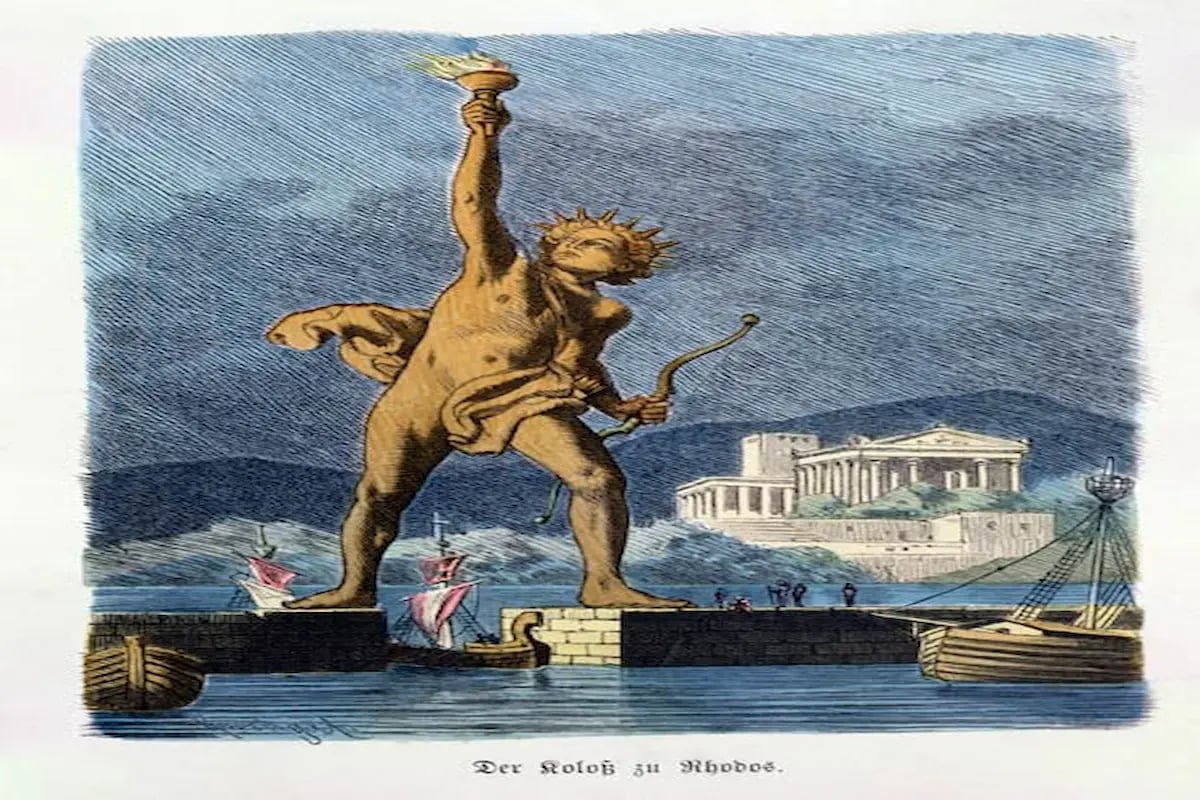
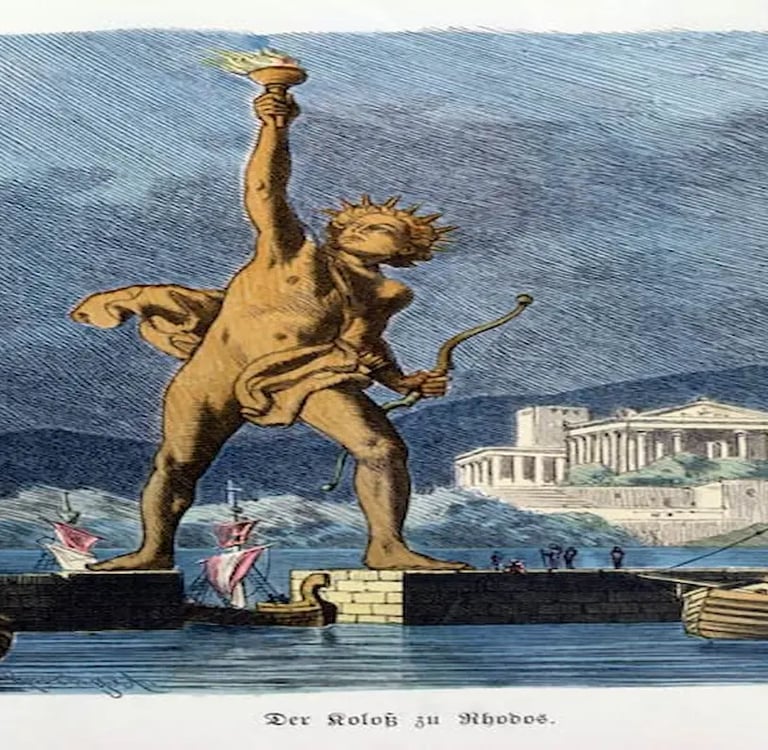
This guide is part of the History of Rhodes collection under Discover Rhodes — exploring the island’s ancient stories, legendary landmarks and cultural soul beyond beaches and resorts.
Hey traveller! I’m Looneytravels — your Local Rhodes Expert who wants your holiday here to be smooth, memorable and totally stress-free.
If you ever want to explore Rhodes beyond the ancient myths, you can always jump into the Rhodes Travel Guide 2026 or follow the ready-made routes in the Rhodes 7-Day Itinerary whenever it suits you.
Grab my FREE Rhodes Pocket Planner (instant download) — the hidden shortcut to easy boat trip bookings, must-do experiences, and smoother holiday planning.
⭐ Why the Colossus of Rhodes Still Captures the World’s Imagination
Even after 2,200 years, the Colossus of Rhodes remains one of the most famous icons of the ancient world — a symbol of victory, pride, engineering genius and imagination. It was one of the Seven Wonders of the Ancient World, and even though it hasn’t stood for centuries, people still come to Rhodes asking:
“Where exactly was the Colossus located?”
“Does anything remain today?”
“How tall was it, really?”
“Did it stand with legs apart over the harbour?”
“Will Rhodes ever rebuild it?”
According to Lonely Planet, the island’s ancient heritage still shapes the identity of Rhodes today, with the Colossus standing at the heart of that story.
As VisitGreece explains, the monument wasn’t just a statue — it was a celebration of victory and a symbol of unity across the island.
And in a feature by National Geographic, the Colossus is often described as one of antiquity’s boldest engineering achievements, inspiring artists, travellers and historians even now.
In this guide, I’ll take you through everything you need to know:
What the Colossus really looked like
Who built it
How it collapsed
Where it stood
Why the “legs apart over the harbour” image is a myth
What you can still see or visit today
And why Rhodes has debated rebuilding it for over 100 years
Let’s dive into the past — with your feet firmly planted on the island in 2026.
⭐ The History Behind the Colossus of Rhodes
The story of the Colossus of Rhodes begins in 305 BC, during a turbulent era of shifting kingdoms and powerful successors of Alexander the Great. Rhodes was a wealthy maritime hub — a free trading city with strong political alliances. When the island successfully defended itself against a massive siege by Demetrius Poliorcetes, the people of Rhodes decided to celebrate their victory.
And how did they do it?
By building one of the most extraordinary monuments the ancient world had ever seen.
⭐ Who Built the Colossus?
The sculptor Chares of Lindos, from the ancient village of Lindos here on Rhodes, designed and constructed the statue. He was a student of Lysippos — one of the greatest sculptors of the classical era — so he came from a tradition of monumental art.
The statue was dedicated to Helios, the sun god and protector of Rhodes. The island has always been linked to sunlight — even today locals joke that Helios still blesses Rhodes with “300 days of sunshine a year.”
⭐ How Tall Was the Colossus?
Most historical sources estimate the statue at around 32–33 metres tall (roughly 105 feet).
For comparison:
That’s the height of a modern 10-storey building.
It was similar in height to the Statue of Liberty’s body (not counting the torch).
Even today, imagining such a massive bronze figure built without modern machines is mind-blowing.
⭐ How Was It Built?
Chares and his team used a method that historians still admire:
Bronze sheets were cast and shaped
They created a hollow shell
Inside, they added iron and stone supports
The statue was built piece by piece, with a giant earthen ramp surrounding it
Workers climbed the dirt ramp as the statue rose
At the end, they removed the soil, revealing the completed Colossus
This process took 12 years — from 292 BC to 280 BC.
⭐ How Did the Colossus Collapse?
Sadly, the Colossus stood for only around 56 years. In 226 BC, a massive earthquake struck Rhodes. The statue snapped at the knees and fell to the ground — an event described by several ancient writers.
The Rhodians were devastated, but the Oracle of Delphi told them not to rebuild the statue, believing they had offended Helios. Devout and respectful, the Rhodians obeyed.
But here’s the surprising part:
For the next 900 years, the fallen statue remained on the ground and became a tourist attraction. Ancient travellers wrote that even lying broken, the Colossus was so impressive that people could crawl inside its fingers.
Eventually, in the 7th century AD, the metal was sold and removed, and the Colossus disappeared from the island forever — leaving only the legend behind.
⭐ The Colossus of Rhodes: Myths, Modern Theories & What Actually Stood Here
Even though the Colossus fell long ago, modern travellers often arrive with a head full of Hollywood images, video-game scenes or fantasy illustrations. Let’s clear up the biggest myths.
⭐ Myth #1 — The Colossus Stood With Its Legs Apart Over Mandraki Harbour
This is the most famous image… and absolutely not true.
Ancient engineering simply couldn’t support a huge bronze statue with legs far apart over a harbour entrance.
No ancient source describes such a pose.
No ancient writer mentions ships sailing between its legs.
The “legs apart” idea was invented in the Middle Ages, long after the statue was gone.
The real Colossus likely stood on solid ground, feet together, in a calm and stable posture typical of Greek sculpture.
⭐ Myth #2 — It Stood Where the Deer Statues (the Mandraki Columns) Are Today
Another common misunderstanding.
The deer statues are beautiful — and iconic for modern Rhodes — but they are not Roman, not Greek, not ancient, and not connected to the Colossus. They are modern symbols installed for aesthetics.
⭐ Myth #3 — Nothing Remains of the Colossus
This is technically true — no parts of the statue survive.
But the history, location theories, and the cultural imprint remain incredibly strong.
Some researchers believe the statue stood near:
The acropolis of Rhodes
The Temple of Helios
The commercial port area
Or slightly inland from Mandraki
We’ll explore these in more detail shortly.
⭐ Myth #4 — The Colossus Will Be Rebuilt Soon
Many dream of rebuilding the Colossus — architects, artists, engineers, and even several local organisations. Plans appear every decade or two, but:
No design has been approved
No funding agreement has been made
It remains a topic of debate
Some want a modern artistic interpretation.
Others want a historical reconstruction.
Many locals worry that rebuilding could overshadow the Old Town, a UNESCO site.
For now, rebuilding remains a beautiful idea — not a concrete project.
Rhodes has an incredible history stretching from ancient Greece to the medieval Knights of St. John. These guides explore the island’s most fascinating historic sites:
→ The History of Rhodes Greece: From Myth to Medieval Masterpiece
→ Palace of the Grand Master Rhodes – Tickets, History & Tips
→ Ancient Kamiros Rhodes – History, Tickets, Visiting Guide & Local Tips (2026)
⭐Where the Colossus of Rhodes Likely Stood (Local Insight)
Let’s look at the most supported locations, based on historians, archaeologists and local knowledge.
⭐ 1. Near Mandraki Harbour (But Not Over It)
This is the most popular theory for travellers today. Many historians believe the statue faced the sea, standing near the harbour entrance to symbolise Rhodes naval power.
Possible exact spots include:
The small peninsula next to St. Nicholas Fortress
The inland area behind today’s windmills
The landward side of Mandraki
⭐ 2. The Acropolis of Rhodes
Some researchers propose the acropolis hill overlooking modern Rhodes Town.
Standing here, the statue would have been visible from miles away — a powerful message for incoming ships.
⭐ 3. Close to the Ancient Temple of Helios
This theory connects the statue to its spiritual home.
The exact location of the temple is not confirmed, but it likely stood slightly inland.
⭐ 4. A Central Position Inside the Ancient City
Several ancient cities placed monuments at central crossroads or near their main temples.
Some believe the Colossus may have stood in such a civic area, visible to citizens and travellers alike.
At the end of the day, the ancient world did not leave us precise coordinates — but the spirit of the Colossus is alive in all these spots.
⭐ What You Can See Today as a Traveller
Here’s the honest truth:
No physical remains of the Colossus are visible today.
But you can visit or see:
If you want deeper historical context instead of reading plaques alone, compare expert-led cultural walks and archaeology-focused routes inside Best Guided Tours in Rhodes — especially useful for understanding how the Colossus connects to Mandraki, the Acropolis and the wider ancient city.
⭐ Mandraki Harbour
The symbolic modern location of the Colossus.
Walk along the sea, see the deer statues and windmills, and imagine the ancient harbour full of ships.
Many visitors combine Mandraki with a coastal cruise or sunset sailing departure from the same harbour — you can browse curated sea-based options inside Best Boat Trips in Rhodes if you’d like to experience the same waters the ancient Rhodians once ruled.
⭐ St. Nicholas Fortress
A medieval fortress at the end of the Mandraki breakwater. Some theories place the base of the Colossus nearby.
⭐ Rhodes Archaeological Museum
Displays statues, inscriptions and artefacts from the period when the Colossus was built.
⭐ The Acropolis of Rhodes
Beautiful sea views and ancient remains — not the Colossus itself, but part of the city’s ancient landscape.
⭐ Lindos
Home of Chares, the sculptor.
Wandering the acropolis gives you a sense of the creative culture that produced the Colossus.
If you’d like to connect Lindos, ancient Kamiros and other historical landmarks into one structured route, compare curated cultural options inside Best Day Trips in Rhodes — ideal if you prefer history without organising transport yourself.
These well-known landmarks are some of the most interesting places to visit while exploring the island:
→ Lindos Acropolis – Complete 2026 Visitor Guide (Tickets, History & Tips)
→ Kallithea Springs Rhodes – Complete 2026 Visitor Guide
→ Monolithos Castle Rhodes – Local Guide, History, Beaches & How to Visit (2026)
→ Kritinia Castle Rhodes – Local Guide, Medieval Festival, History & How To Visit
⭐ FAQ — The Colossus of Rhodes (2026)
⭐ Does anything remain of the Colossus of Rhodes today?
No physical fragments of the Colossus have survived — not its bronze plates, not its internal support structure, not its base. Ancient writers said the fallen statue remained on the ground for centuries, and people could even climb inside the bronze pieces. But by the 7th century AD, the metal was removed and sold abroad.
What does remain is the historical landscape:
Mandraki Harbour, St. Nicholas Fortress, the Rhodes Acropolis, and the archaeology museum all help you understand the world the Colossus once dominated. For a deeper cultural visit around the island, you can explore the Rhodes Old Town Guide 2026 — What to See, Eat & Explore, which pairs beautifully with this history.
⭐ Where exactly did the Colossus stand?
The exact location is still debated, but most experts agree on 3 strong possibilities:
• Near Mandraki Harbour — likely on land beside the entrance, not straddling it.
• The Acropolis of Rhodes — overlooking the ancient city and sea.
• A civic-religious centre near the Temple of Helios — slightly inland.
If staying close to Mandraki or Old Town so you can explore these historic areas on foot matters to you, compare central bases early inside Top Hotels in Rhodes — harbour-view properties sell out quickly in peak season.
The famous idea of the Colossus standing with legs apart over the harbour is a medieval myth. No ancient engineer, writer or sculptor ever described such a pose. Modern 3D reconstructions and historical studies support a grounded, stable stance typical of Greek monumental art.
⭐ Did ships really sail between its legs like in old illustrations?
No — this never happened.
The image comes from Renaissance artists who romanticised the concept but misunderstood ancient engineering. A 33-metre bronze statue standing on wide-spread legs over a harbour entrance would have been structurally impossible with ancient technology.
The real Colossus likely stood:
• With legs together
• On solid stone foundations
• Facing outward toward the sea
• In a traditional Greek posture of calm strength
If you want to compare this with modern artistic landmarks around the island, check Rhodes Greece: Why It’s the Best Greek Island to Visit in 2026 — it features several contemporary sites that continue the island’s artistic tradition.
⭐ Why was the Colossus built?
The Colossus was built to celebrate Rhodes’ victory over Demetrius Poliorcetes after the failed siege of 305–304 BC. It was a political statement, a religious dedication to the sun god Helios, and a show of engineering brilliance.
Rhodes was a wealthy maritime republic. Building a statue of this size sent a clear message:
“We are independent, powerful, protected, and proud.”
Even today, Rhodes carries that spirit — from its medieval Old Town to its modern coastal villages.
⭐ How long did the Colossus stand before collapsing?
Around 56 years.
Built between 292–280 BC, the statue fell in an earthquake in 226 BC.
Even though it collapsed early, its fame continued for over 2,200 years.
The fallen remains stayed on display for centuries — Roman, Byzantine and early travellers wrote that people could walk inside the bronze pieces. This shows how impressive it was, even in ruins.
⭐ Was the Colossus the tallest statue of its time?
Yes — it was one of the tallest statues in the ancient world.
Standing at 32–33 metres, it was comparable in height to:
• A modern 10-storey building
• The Statue of Liberty (without the torch)
In the Hellenistic period, creating a bronze monument of this scale was nearly miraculous. National Geographic describes it as “one of antiquity’s boldest engineering achievements,” and modern historians widely agree.
⭐ Why didn’t the ancient Rhodians rebuild it after the earthquake?
The Rhodians originally wanted to rebuild it.
But after the collapse, the Oracle of Delphi warned them that Helios might be displeased. Deeply religious and respectful, the Rhodians obeyed. They left the statue in place for nearly a millennium.
Modern Rhodes, however, has debated rebuilding the monument many times — proposals appear every decade, but none have been approved. For now, it remains a symbolic idea rather than a real project.
⭐ Can I visit the exact site of the Colossus in 2026?
You can visit the possible locations, but none have confirmed archaeological evidence. The most popular spots for visitors are:
• Mandraki Harbour — the modern symbolic location
• St. Nicholas Fortress — theorised base area
• Windmills of Mandraki — close to one proposed position
• Rhodes Acropolis — offering panoramic views of where ancient Rhodes once stood
⭐ Will Rhodes rebuild the Colossus in the future?
Possibly — but nothing is planned officially.
Groups of architects and artists have proposed modern interpretations such as:
• A 3D-light monument
• A cultural centre shaped like a stylised Helios
• A futuristic bronze structure symbolising unity
But major challenges remain:
• Funding
• UNESCO concerns (to protect Old Town’s skyline)
• Public opinion
• Engineering feasibility
So while the idea continues to inspire, no project has begun.
⭐ Why is the Colossus still so famous if nothing remains?
Because the story is unforgettable.
• A giant bronze sun-god statue
• Built after a heroic victory
• Created by a master sculptor from Lindos
• One of the Seven Wonders of the Ancient World
• Destroyed by nature
• Written about for centuries
• Inspire countless artworks, films and myths
It’s the combination of history + tragedy + mystery that keeps the legend alive.
Just like wandering Rhodes Old Town or relaxing on Lindos rooftops, the Colossus remains part of the island’s emotional identity.
⭐ Is the “Deer Statues at Mandraki” location true?
No — the deer statues (Elafos & Elafina) are modern, created to decorate the harbour and symbolise Rhodes’s gentle character.
They are not indicators of where the Colossus stood, and they are not ancient artefacts.
They are beautiful — but not archaeological evidence.
⭐ Is the Colossus connected to Rhodes Weather or earthquakes today?
Rhodes Weather today is warm, stable and sunny — but earthquakes are part of Greece’s geology. Modern buildings follow strict seismic guidelines, unlike ancient structures.
If you want to understand Rhodes climate through the year, you’ll love Rhodes Weather: Complete Year-Round Guide (Best Time to Visit) — especially if you’re planning to explore Mandraki or the Acropolis on foot.
⭐ Is there anything Colossus-related for kids or families?
Yes — families usually enjoy:
• Imagining the statue at Mandraki
• Visiting St. Nicholas Fortress
• Seeing miniature models in local shops
• Exploring the Rhodes Archaeological Museum
⭐ Last Thoughts
The Colossus of Rhodes may no longer stand, but its story is still alive in the harbour breeze, the medieval towers, the ancient acropolis and the imagination of every traveller who arrives here. It represents resilience, pride, creativity and a deep cultural history that still shapes the island today.
If you’d ever like a deeper look at Rhodes — from ancient myths to modern villages, from beaches to hidden viewpoints — you can always explore the Rhodes Travel Guide 2026 or wander through the Rhodes 7-Day Itinerary whenever it suits you.
⭐ More Guides to Make Your Rhodes Trip Smoother
If you want your holiday to feel relaxed and easy from the moment you land, here are some of my most helpful Rhodes guides. Each one is written in simple English, based on real local experience, so you can plan your days with confidence and avoid confusion.
If you want a smooth arrival directly to Mandraki or Old Town without taxi uncertainty, you can request a fixed-price private transfer via G.E.S Travel on WhatsApp — the message is prefilled with “Looneytravels,” so your 10% partner discount is applied automatically. It’s especially helpful during summer evenings when cruise ships arrive.
⭐Plan Your Experience in Rhodes
Not sure where to start? → Plan Your Rhodes Trip
By now, you probably realise that the difference between an “okay” trip and an unforgettable one in Rhodes comes down to what you actually do — not just where you stay.
If you don’t want to waste time comparing hundreds of options or risk choosing the wrong experience, I’ve already done the work for you.
👉 Start here:
→ Best Experiences in Rhodes (2026)
→ Best Boat Trips in Rhodes (2026)
→ Best Day Trips from Rhodes (2026)
→ Best Guided Tours in Rhodes (2026)
These are based on real local knowledge, traveller feedback, and what’s actually worth your time.
🚙Prefer something more flexible?
→ Private Transfers & Tours in Rhodes — custom routes, private drivers, airport pickups, and personalised island trips
🚗Want full freedom to explore?
→ Car Rental Rhodes — best options, local tips & trusted companies
📘If you want everything organised day-by-day:
→ Rhodes Digital Travel Guide 2026 (Local, Instant Download)


Looneytravels Network
Rhodes Booking Marketplace Rhodes Explorer Rent a Car in Rhodes Rhodes Car Rental Rhodes Airport Car Rental Rhodes Excursions Soul Sisters Tarot
Websites run by the Looneytravels team.